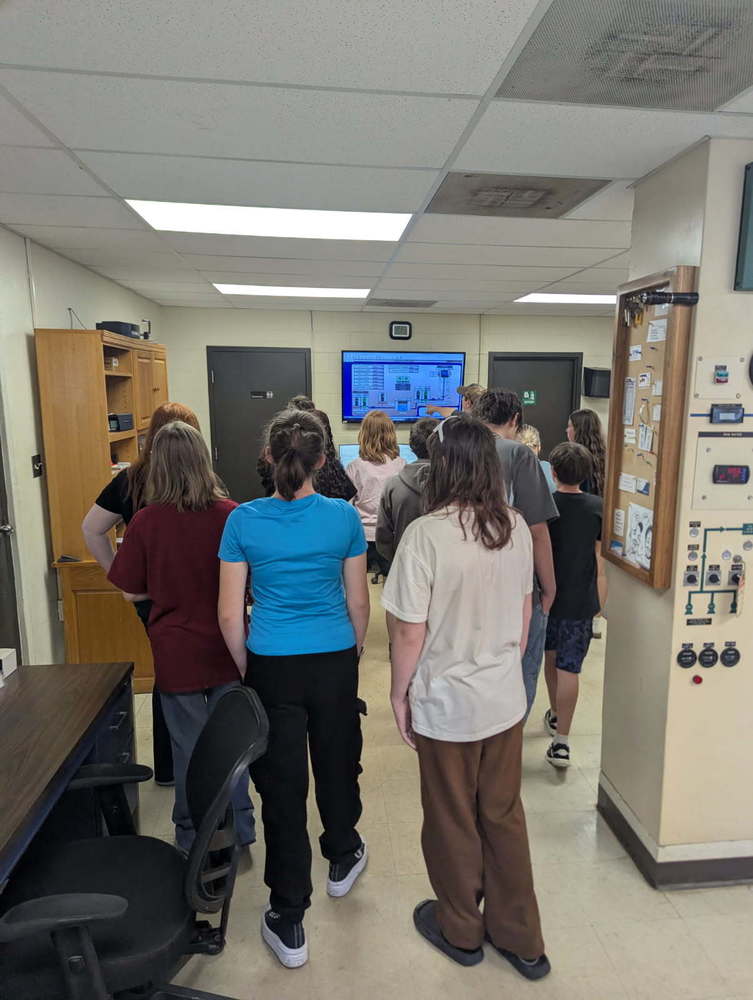
On April 14th, Mr. Vogeler’s 8th grade science class took part in a career exploration field trip focused on careers in the water industry. Students attended the Kansas Rural Water Association’s “Explore Careers in Water” event in Osage City, where they had the opportunity to learn more about the many skills and career pathways connected to providing safe, reliable water service to communities.
The event included a full morning of hands-on stations and demonstrations. According to Mr. Vogeler, students explored a groundwater model, the water treatment process, Dig Safe with Kansas 811, leak detection and repair, the KRWA training trailer, and a “Super Bowl Surge Activity.” The day also included a tour of the Osage City Water Treatment Plant.
Experiences like this help students connect classroom learning to real-world careers. Water careers involve much more than most people realize. The Kansas Rural Water Association provides training for water and wastewater systems across the state, offers technical assistance in areas such as source water protection, emergency planning, water conservation, and leak detection, and also shares job postings and apprenticeship opportunities for those interested in entering the field. (Kansas Rural Water Association)
There is also a real workforce need in this industry. The U.S. Bureau of Labor Statistics reports that water and wastewater treatment plant and system operators earned a median annual wage of $58,260 in May 2024, with about 10,700 openings projected each year over the next decade, largely due to retirements and workers leaving the field. The U.S. Environmental Protection Agency has also noted that approximately one-third of drinking water and wastewater operators in the United States will be eligible to retire within 10 years, creating an ongoing need for the next generation of trained workers. (Bureau of Labor Statistics)
For MdCV students, the trip was a valuable opportunity to see that science is not limited to the classroom. From water treatment and system maintenance to public safety, environmental protection, and infrastructure support, students were able to see firsthand how many important careers depend on science, problem-solving, and service to others.
We appreciate Mr. Vogeler for creating this opportunity for students and thank the Kansas Rural Water Association and its partners for hosting an engaging and educational day.